主讲人Speaker: Arpad Abrahám 教授 英国布里斯托大学
时间Date & Time: 2026年3月12日(周四),15:00--16:30
地点Venue:粤海校区汇星楼一层3号教室
内容简介/ Abstract:
Private retirement plans have become an increasingly important component of household wealth in the United States, with nearly two-thirds of Americans having access to employer-sponsored defined contribution plans. These plans have significant tax advantages, as both employee and employer contributions are tax-exempt, while the returns remain untaxed until their withdrawal during retirement. We develop a quantitative lifecycle model that incorporates both private and public pension systems, the lifecycle profile of homeownership, as well as a detailed tax-and-transfer system. Our model can replicate key empirical regularities, such as the observed distribution of private retirement wealth by age and income or the age and income dependence of pick-up rates. When we eliminate the tax advantages of private pensions, we find that both the employee and employer tax-free contributions play an important role. Moreover, the reform that eliminates all tax advantages of private pensions leads to a considerable decline in both pension and total wealth, a wider tax base that allows the government to reduce taxation, generating substantial intergenerational redistribution towards current generations, and small effects on within cohort inequality.
主讲人介绍/Biography of the speaker:
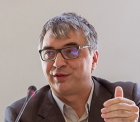
Professor Arpad Abraham is currently the head of the School of Economics at the University of Bristol. Previously he held and assistant professor positions at Duke and Rochester and was head of the Economics department and Chair in Macroeconomics at the European University Institute. His research covers several areas of quantitative macroeconomics and macroeconomic theory including optimal taxation, institutional design and risk sharing under private information and limited commitment frictions and has been published widely in leading journals such as the Review of Economic Studies, the Journal of Economic Theory or the Journal of Public Economics. He has advised more than 50 PhD students.